The Flat File has moved!

You should be automatically redirected in 6 seconds. If not, visit
http://ws-flatfile.com
and update your bookmarks.

Showing posts with label Photolucida. Show all posts

19 November, 2009

Lishui Photo - Mary Parisi


Mary Parisi left for China today.

Her work, looking at food is based on the artistic, rather than culinary, allowing us to create an emotional connection of our own to foods so personal to her.


more about Food Pictures -
This body of work is about food. All the pictures resulted from foods, which I cooked and ate. Some of the food, like the chicken soup pictures are reminders of my childhood and my father who made chicken soup every other Monday for many years.
To some extent the pictures are related to my history as a sculptor because I think of food as material for art. I am indebted to the artist Joseph Bueys and his use of fat for its physical properties and metaphorical value.
I have to admit that while I am not a vegetarian, I live with a reluctance to take as food other animals, who like us have blood in their veins. I have no answer for this dilemma. I can only acknowledge the conflict and try to say, it is a chicken or a pig or the fat rendered from the pig’s body and it is delicious and beautiful and horrible.

Lishui Photo - Karen Strom


Karen Strom is one of a pair of Stroms. Her husband, Stephen is a photographer as well. Both Stroms are accomplished scientists, who have now focused on creative endeavors. Stephen's work, abstract large scale landscapes, was profiled earlier this month as part of the Lishui Festival. Karen's work is significantly different than Stephen's in her process, eye and creative focus. Her composited works create environments, visions and scenes that are often miles apart. Her blending of textures creates what she calls Architectonics.

Here is more about her process -

"The world I see is composed of many different layers, scales and moments. When making an image, I explore the relationships between multiple facets of the world, integrating them into a single vision in an attempt to mimic the manner in which the mind forms composite impressions from the array of images that are constantly impinging upon you. While the resulting images often evoke disparate, even conflicting, responses, they ultimately capture a more complete impression of a landscape or object: details are synthesized into broader views; interiors integrated into exterior views. It is the ambiguity of my images, the feelings evoked by differing scales, perspectives and viewpoints, that together work to yield an integrated image of a landscape. It is these visions that I then attempt to translate into a single image, hoping to evoke similar emotional and intellectual responses in the viewer. "

18 November, 2009

Lishui Photo - Sarah Hadley


I met Sarah in Portland at PhotoLucida this April. She had a beautiful, romantic and really gorgeous portfolio on Venice. Sarah is also one of the participants of the Lishui Festival. The organizing committee chose a different body of work, Water's Edge. Having spent my youth on a beach, and getting back to it as often as I can, I understand the power the ocean holds over us, the metaphors it can conjure and most often I have the overwhelming urge to plunge in and be surrounded in the silence. Sarah's images lead me to that moment. Her Black and white images showcase that fluid ever changing boundary beautifully.


about
"The Water's Edge":

I grew up spending entire summer days by the ocean. These outings were always a special event and the beach was a place of wonderment, fascination and exploration for me. I loved the enormity and freedom the beach provided and the sense that we had entered a space where time was lost and the only rhythm was governed by the tides. As an adult, I have lived close to two great bodies of water--Lake Michigan and now the Pacific Ocean, and I've found myself drawn to beaches wherever I travel, especially when I can be alone in these vast panoramas. The complex and ever-changing landscape feels like stepping into an altered reality and I am interested in how the patterns in sand, sea and sky echo one another, as well as showing the transformative power of the elements. Capturing that point where water meets land feels like entering an infinity at the edge of the world.

11 November, 2009

Lishui Photo - Rita Maas

Rita Maas and curator Paula Tognarelli, from the Griffin Museum in Boston head to the Lishui Photo Festival to showcase Rita's series, Reality TV. I reviewed the work in Portland, at PhotoLucida, and found it fascinating. Reality TV is a world unto its own, creating a culture of reality stars and megastars, elevating the average to iconic status. It spawns some curious creatures, like Balloon Boy's Dad, in its more obvious surreal forms.
But what Rita is looking at is far more subliminal and seductive. Think about the palettes she is showing, from TV shows like Top Chef, The Home shopping Network, even news like Obama's Inaguration and baseball games - Pirates vs. Cardinals. We all know how we are affected by sunshine, and what that warm light does to us, how it lifts our spirits as it washes over us. But think about that light emanating form that big screen tv you have on all the time in that background. How does that affect your mood? Rita's presentation asks a good question, and showcases a perplexing answer.

About her series -

Reality TV was created as a direct response to living in a culture of You Tube and Twit- ter; constantly multitasking on multiple screens and the unending stream of informa- tion, both relevant and banal.

Feeling overwhelmed after the recent political season I felt the need to express my search for relief. The result is “Reality TV”. Each composite photograph represents a television program photographed with the camera directed towards a wall and ceiling or corner of the room where the program is being viewed. The camera takes in the information beamed from the television and reformulates it for the viewer as reflected color. The camera sensor is recording the light over several seconds, blending it as the capture takes place. It is recording the unseeable. The assembled images of saturated color vibrate against each other and are evocative of both field paintings and pixels. They are, in a sense, a reduction of the very notion of a photograph, the recording of light.

This piece is meant to highlight issues of observation and comprehension. How much of the world we inhabit do we really observe? How much do we comprehend of all we take in everyday? To what extent do we create our own reality?

The piece itself hangs on the wall as a kind of spiritual icon, presenting a space of mediation, a transformation of what it was created from.


“Nothing is more abstract than reality” —Giorgio Morandi


10 November, 2009

Lishui Photo - Stan Raucher


Stan Raucher has been traveling the world, capturing the streets of Paris, Latin America and soon, China. I can't wait. I have been watching Stan grow as a photographer over the last few years, and his newest group of portraits I have found really lovely, engaging and intense.

Stan started as an observer, photographing the life he saw around him, now he is a participant, engaging his subjects, and the change is evident.

Here is Stan's statement about his process.

Using natural light and a bit of serendipity, I strive to create compelling black and white photographs that provide a glimpse into aspects of the human condition.

My candid photography documents ordinary people going about their daily lives in public spaces. These images capture fleeting moments, spontaneous gestures and the ephemeral juxtaposition of people and their surroundings. They depict situations that are unexpected, mysterious, humorous, bizarre or poignant. These photos are neither posed nor staged and I do not interact with my subjects before or after photographing them. Creating these images requires both quick reactions and a great deal of shoe leather since there are no second takes for this type of photography.

My portrait photography conveys a distinctly different sensibility. Portraits from Latin America documents people I have met during my journeys through this region. Although these encounters are brief, I attempt to delve beneath the surface and reveal insights into the lives and character of these individuals. These photographs portray a variety of temperaments and display a range of emotions. Making these portraits involves genuine interpersonal interactions that transcend language and cultural barriers.

06 November, 2009

Lishui Photo - Alejandro Cartagena


Alejandro Cartagena's name is everywhere these days. Just announced yesterday, he is on the list for PhotoLucida's Critical Mass top 50. Today he was slated as a book finalist from CM50. An International Discovery at FotoFest in Houston , Alejandro has been highlighted on Joerg Colberg's blog, Conscientious, PDN online, Lenscratch, a participant in Review Santa Fe, and the list goes on and on. He is also joining Taj Forer in Lishui China to showcase his work on Suburbia. I am excited to see how is work is viewed there. What will be the response to the social and economic similarities of expansion and population growth, how it affects their surroundings, and how fundamentally changed the environment becomes....

Here is Taj Forer's statement about Alejandro -
Alejandro Cartagena's 'Suburbia Mexicana' is both aesthetically beautiful and politically, socially and environmentally poignant. The work is timely, deeply personal yet globally relevant. Cartagena's engagement of the real challenges the viewer to contemplate the timeless theme of how we dwell as a society (or collection thereof) with the natural environment. The fast-paced development examined by Cartagena through his photographs is not unlike many blossoming urban and suburban development projects currently found throughout China. The cultural challenges facing communities affected by such government-sponsored development initiatives is uncannily similar throughout the world. By focusing on his hometown of Monterrey, Mexico, Cartagena turns his lens on the complex and nuanced global phenomenon most commonly referred to as "progress." His vivid, straightforward, large-scale color photographs afford the viewer a moment to pause, experience and reflect upon the complicated and far-reaching implications of development. From issues of resource management to changing cultural values, Cartagena's photographs delve into the newness and unknown realities of Mexico's suburban expansion.

05 November, 2009

Lishui Photo - Mark Tompkins


Mark Tompkins work, Dialogues, will be on view in China this month as part of the Lishui Festival. Strong black and white images with text, Tompkins images tell stories and keep us engaged in the images.

about the series DIALOGUES -
By creating dialogues between image and text, this body of work takes on the age-old challenge of depicting multiple perspectives on a subject in a single composition. These conversations address the mystery and irony of the strong story lines that scribe through our lives, often uninvited; story lines on time and death, love and fear, work and play, god and meaning. Each composition organically expands the storyline of the image with the text, and so generates an unusually multifaceted narrative while still leaving plenty of room for the viewer to personalize it – to experience it from their own set of evoked memories, dreams and ideas.

30 October, 2009

Lishui Photo - David Wolf


David Wolf and I met in Portland at PhotoLucida. We had a lovely conversation, and I enjoyed his body of work, Nurturing Time. His architectural, colorful and textured images were perfect for a rainy spring day in April. He is also one of the lucky invitees to Lishui, and I am looking forward to them brightening up a cold November day.

Here is more about his series - Nurturing Time.

“Nurturing Time, Life in a Backyard Garden” inhabits the place where still life and landscape meet.

The project’s working method bridges the disparate practices of found and staged photography to explore how we regard our natural surroundings as we nurture, shape and control them. The series depicts the human presence in Nature in the form of arrangements made from flowers and plants selected from the photographer’s garden, and places them amidst the cycle of growth, decay and rebirth that unfolds there.

To create the assemblages I isolate the plants individually, and arrange and combine them to make associations or suggest contradictions. A simple cardboard box serves as both neutral container and conceptual envelope to display the arrangements. This working practice is itself a metaphor for how we contain and manipulate Nature.

Beyond typology, “Nurturing Time” offers us the richness of the garden and illuminates our connection to it. The assembled flower boxes resonate with a range of emotion, reflecting our own experience of the cycle of life that embraces vitality and decay, abundance and loss. Memory—Time’s shadow—is present here, too, as events and lives are evoked and memorialized by these images.

29 October, 2009

Lishui Photo - Cyrus Karimipour


I have been following Cyrus's work for a couple of years, after first seeing it in Critical Mass, then having the opportunity to meet him at Review Santa Fe. His work is somewhat dark, ominous and hard to read. Which is why I am a fan. My mother the mystery writer says there is trouble lurking around each corner. His figures are shapeshifters, shadows in a landscape. I like work I can come back to over and over and find something new, attach a new story to.
Cyrus received his invitation to showcase his work in Lishui, and I for one am looking forward to seeing it, as well as seeing the reaction to it.

More on Cyrus's series, Invented Memory

This series explores how meaning is assumed and altered through fragmentation

and reassembly.

History informs the present and future; however, new experiences continuously

alter our recollection and interpretation of past events. This body of work mimics

the continuous breakdown and reassembly that occurs as we navigate our daily

experience, in order to illustrate the liquid nature of memory.

Anytime an event or experience is recalled, it is reassembled from fragments

dispersed throughout the brain, and differs slightly from every other time it was

summoned. As our lives progress, not only is our perception of the future

altered, but also that of the past. This seems to cast doubt on the veracity of

what we believe and how we view others and ourselves. If past experience relies

upon, and consequently conforms to what has yet to occur, then there is little that

can be known about who we really are, what we want, and where we are headed.

35mm photographic film and comparably sized inkjet transparencies are

dissected and used to construct small installations. These images are

photographed digitally and printed as archival pigment prints.

The scenes that emerge from this process encourage the seamless and

spontaneous migration between the real and the imaginary, the authentic

and the artificial, the explicit and implicit.


28 October, 2009

Lishui Photo - Ernie Buttons


In Portland, I'm walking around during portfolio walk night, and I am stopped in my tracks by Ernie Buttons' work. I laughed out loud. It was creative, clever, colorful and charming in a Lucky Charm, Capt'n Crunch kind of way. I am excited to see how the work is received in Lishui. I'll let you know.

More on his series Cerealism -

Art is shaped by a person's life experiences and I am no different. When I was a youngster, cereal was a luxury item. A brand name cereal was a rarity in our house as they were consistently more expensive. Something like King Vitamin (a popular 70's cereal) or Cap'n Crunch made for pure breakfast heaven as a child. On a recent trip to the grocery store, there sat King Vitamin next to a new version of Cap'n Crunch, Choco Donuts. Looking at the rest of the cereal aisle, it is clear that breakfast cereal has changed from mere nutrition to sheer entertainment. The cereal aisle has become a cornucopia of vibrantly colored marshmallows that resemble people and objects and characters from movies, as if they were calling out to have their portraits taken, to be the center of attention. However, on the other side of the aisle sits the more 'adult' cereals (i.e. fiber, bran). Having lived in Arizona for over 30 years, those cereals upon close inspection resemble some of the shapes and colors and textures of the southwestern desert. I began to construct landscapes that would utilize the natural earth tones of certain cereals. I placed enlarged photographs of actual Arizona skies in the background of the cereal landscapes giving the final image an odd sense of reality. It is apparent that cereal is not just for breakfast anymore. Cereal has evolved into pop culture objects instead of just nutritious corn pops.
Showing posts with label Photolucida. Show all posts

19 November, 2009

Lishui Photo - Mary Parisi


Mary Parisi left for China today.

Her work, looking at food is based on the artistic, rather than culinary, allowing us to create an emotional connection of our own to foods so personal to her.


more about Food Pictures -
This body of work is about food. All the pictures resulted from foods, which I cooked and ate. Some of the food, like the chicken soup pictures are reminders of my childhood and my father who made chicken soup every other Monday for many years.
To some extent the pictures are related to my history as a sculptor because I think of food as material for art. I am indebted to the artist Joseph Bueys and his use of fat for its physical properties and metaphorical value.
I have to admit that while I am not a vegetarian, I live with a reluctance to take as food other animals, who like us have blood in their veins. I have no answer for this dilemma. I can only acknowledge the conflict and try to say, it is a chicken or a pig or the fat rendered from the pig’s body and it is delicious and beautiful and horrible.
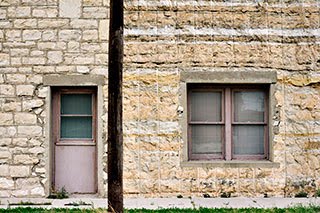
Lishui Photo - Karen Strom


Karen Strom is one of a pair of Stroms. Her husband, Stephen is a photographer as well. Both Stroms are accomplished scientists, who have now focused on creative endeavors. Stephen's work, abstract large scale landscapes, was profiled earlier this month as part of the Lishui Festival. Karen's work is significantly different than Stephen's in her process, eye and creative focus. Her composited works create environments, visions and scenes that are often miles apart. Her blending of textures creates what she calls Architectonics.

Here is more about her process -

"The world I see is composed of many different layers, scales and moments. When making an image, I explore the relationships between multiple facets of the world, integrating them into a single vision in an attempt to mimic the manner in which the mind forms composite impressions from the array of images that are constantly impinging upon you. While the resulting images often evoke disparate, even conflicting, responses, they ultimately capture a more complete impression of a landscape or object: details are synthesized into broader views; interiors integrated into exterior views. It is the ambiguity of my images, the feelings evoked by differing scales, perspectives and viewpoints, that together work to yield an integrated image of a landscape. It is these visions that I then attempt to translate into a single image, hoping to evoke similar emotional and intellectual responses in the viewer. "

18 November, 2009

Lishui Photo - Sarah Hadley


I met Sarah in Portland at PhotoLucida this April. She had a beautiful, romantic and really gorgeous portfolio on Venice. Sarah is also one of the participants of the Lishui Festival. The organizing committee chose a different body of work, Water's Edge. Having spent my youth on a beach, and getting back to it as often as I can, I understand the power the ocean holds over us, the metaphors it can conjure and most often I have the overwhelming urge to plunge in and be surrounded in the silence. Sarah's images lead me to that moment. Her Black and white images showcase that fluid ever changing boundary beautifully.


about
"The Water's Edge":

I grew up spending entire summer days by the ocean. These outings were always a special event and the beach was a place of wonderment, fascination and exploration for me. I loved the enormity and freedom the beach provided and the sense that we had entered a space where time was lost and the only rhythm was governed by the tides. As an adult, I have lived close to two great bodies of water--Lake Michigan and now the Pacific Ocean, and I've found myself drawn to beaches wherever I travel, especially when I can be alone in these vast panoramas. The complex and ever-changing landscape feels like stepping into an altered reality and I am interested in how the patterns in sand, sea and sky echo one another, as well as showing the transformative power of the elements. Capturing that point where water meets land feels like entering an infinity at the edge of the world.

11 November, 2009

Lishui Photo - Rita Maas

Rita Maas and curator Paula Tognarelli, from the Griffin Museum in Boston head to the Lishui Photo Festival to showcase Rita's series, Reality TV. I reviewed the work in Portland, at PhotoLucida, and found it fascinating. Reality TV is a world unto its own, creating a culture of reality stars and megastars, elevating the average to iconic status. It spawns some curious creatures, like Balloon Boy's Dad, in its more obvious surreal forms.
But what Rita is looking at is far more subliminal and seductive. Think about the palettes she is showing, from TV shows like Top Chef, The Home shopping Network, even news like Obama's Inaguration and baseball games - Pirates vs. Cardinals. We all know how we are affected by sunshine, and what that warm light does to us, how it lifts our spirits as it washes over us. But think about that light emanating form that big screen tv you have on all the time in that background. How does that affect your mood? Rita's presentation asks a good question, and showcases a perplexing answer.

About her series -

Reality TV was created as a direct response to living in a culture of You Tube and Twit- ter; constantly multitasking on multiple screens and the unending stream of informa- tion, both relevant and banal.

Feeling overwhelmed after the recent political season I felt the need to express my search for relief. The result is “Reality TV”. Each composite photograph represents a television program photographed with the camera directed towards a wall and ceiling or corner of the room where the program is being viewed. The camera takes in the information beamed from the television and reformulates it for the viewer as reflected color. The camera sensor is recording the light over several seconds, blending it as the capture takes place. It is recording the unseeable. The assembled images of saturated color vibrate against each other and are evocative of both field paintings and pixels. They are, in a sense, a reduction of the very notion of a photograph, the recording of light.

This piece is meant to highlight issues of observation and comprehension. How much of the world we inhabit do we really observe? How much do we comprehend of all we take in everyday? To what extent do we create our own reality?

The piece itself hangs on the wall as a kind of spiritual icon, presenting a space of mediation, a transformation of what it was created from.


“Nothing is more abstract than reality” —Giorgio Morandi


10 November, 2009

Lishui Photo - Stan Raucher


Stan Raucher has been traveling the world, capturing the streets of Paris, Latin America and soon, China. I can't wait. I have been watching Stan grow as a photographer over the last few years, and his newest group of portraits I have found really lovely, engaging and intense.

Stan started as an observer, photographing the life he saw around him, now he is a participant, engaging his subjects, and the change is evident.

Here is Stan's statement about his process.

Using natural light and a bit of serendipity, I strive to create compelling black and white photographs that provide a glimpse into aspects of the human condition.

My candid photography documents ordinary people going about their daily lives in public spaces. These images capture fleeting moments, spontaneous gestures and the ephemeral juxtaposition of people and their surroundings. They depict situations that are unexpected, mysterious, humorous, bizarre or poignant. These photos are neither posed nor staged and I do not interact with my subjects before or after photographing them. Creating these images requires both quick reactions and a great deal of shoe leather since there are no second takes for this type of photography.

My portrait photography conveys a distinctly different sensibility. Portraits from Latin America documents people I have met during my journeys through this region. Although these encounters are brief, I attempt to delve beneath the surface and reveal insights into the lives and character of these individuals. These photographs portray a variety of temperaments and display a range of emotions. Making these portraits involves genuine interpersonal interactions that transcend language and cultural barriers.

06 November, 2009

Lishui Photo - Alejandro Cartagena


Alejandro Cartagena's name is everywhere these days. Just announced yesterday, he is on the list for PhotoLucida's Critical Mass top 50. Today he was slated as a book finalist from CM50. An International Discovery at FotoFest in Houston , Alejandro has been highlighted on Joerg Colberg's blog, Conscientious, PDN online, Lenscratch, a participant in Review Santa Fe, and the list goes on and on. He is also joining Taj Forer in Lishui China to showcase his work on Suburbia. I am excited to see how is work is viewed there. What will be the response to the social and economic similarities of expansion and population growth, how it affects their surroundings, and how fundamentally changed the environment becomes....

Here is Taj Forer's statement about Alejandro -
Alejandro Cartagena's 'Suburbia Mexicana' is both aesthetically beautiful and politically, socially and environmentally poignant. The work is timely, deeply personal yet globally relevant. Cartagena's engagement of the real challenges the viewer to contemplate the timeless theme of how we dwell as a society (or collection thereof) with the natural environment. The fast-paced development examined by Cartagena through his photographs is not unlike many blossoming urban and suburban development projects currently found throughout China. The cultural challenges facing communities affected by such government-sponsored development initiatives is uncannily similar throughout the world. By focusing on his hometown of Monterrey, Mexico, Cartagena turns his lens on the complex and nuanced global phenomenon most commonly referred to as "progress." His vivid, straightforward, large-scale color photographs afford the viewer a moment to pause, experience and reflect upon the complicated and far-reaching implications of development. From issues of resource management to changing cultural values, Cartagena's photographs delve into the newness and unknown realities of Mexico's suburban expansion.

05 November, 2009

Lishui Photo - Mark Tompkins


Mark Tompkins work, Dialogues, will be on view in China this month as part of the Lishui Festival. Strong black and white images with text, Tompkins images tell stories and keep us engaged in the images.

about the series DIALOGUES -
By creating dialogues between image and text, this body of work takes on the age-old challenge of depicting multiple perspectives on a subject in a single composition. These conversations address the mystery and irony of the strong story lines that scribe through our lives, often uninvited; story lines on time and death, love and fear, work and play, god and meaning. Each composition organically expands the storyline of the image with the text, and so generates an unusually multifaceted narrative while still leaving plenty of room for the viewer to personalize it – to experience it from their own set of evoked memories, dreams and ideas.

30 October, 2009

Lishui Photo - David Wolf


David Wolf and I met in Portland at PhotoLucida. We had a lovely conversation, and I enjoyed his body of work, Nurturing Time. His architectural, colorful and textured images were perfect for a rainy spring day in April. He is also one of the lucky invitees to Lishui, and I am looking forward to them brightening up a cold November day.

Here is more about his series - Nurturing Time.

“Nurturing Time, Life in a Backyard Garden” inhabits the place where still life and landscape meet.

The project’s working method bridges the disparate practices of found and staged photography to explore how we regard our natural surroundings as we nurture, shape and control them. The series depicts the human presence in Nature in the form of arrangements made from flowers and plants selected from the photographer’s garden, and places them amidst the cycle of growth, decay and rebirth that unfolds there.

To create the assemblages I isolate the plants individually, and arrange and combine them to make associations or suggest contradictions. A simple cardboard box serves as both neutral container and conceptual envelope to display the arrangements. This working practice is itself a metaphor for how we contain and manipulate Nature.

Beyond typology, “Nurturing Time” offers us the richness of the garden and illuminates our connection to it. The assembled flower boxes resonate with a range of emotion, reflecting our own experience of the cycle of life that embraces vitality and decay, abundance and loss. Memory—Time’s shadow—is present here, too, as events and lives are evoked and memorialized by these images.

29 October, 2009

Lishui Photo - Cyrus Karimipour


I have been following Cyrus's work for a couple of years, after first seeing it in Critical Mass, then having the opportunity to meet him at Review Santa Fe. His work is somewhat dark, ominous and hard to read. Which is why I am a fan. My mother the mystery writer says there is trouble lurking around each corner. His figures are shapeshifters, shadows in a landscape. I like work I can come back to over and over and find something new, attach a new story to.
Cyrus received his invitation to showcase his work in Lishui, and I for one am looking forward to seeing it, as well as seeing the reaction to it.

More on Cyrus's series, Invented Memory

This series explores how meaning is assumed and altered through fragmentation

and reassembly.

History informs the present and future; however, new experiences continuously

alter our recollection and interpretation of past events. This body of work mimics

the continuous breakdown and reassembly that occurs as we navigate our daily

experience, in order to illustrate the liquid nature of memory.

Anytime an event or experience is recalled, it is reassembled from fragments

dispersed throughout the brain, and differs slightly from every other time it was

summoned. As our lives progress, not only is our perception of the future

altered, but also that of the past. This seems to cast doubt on the veracity of

what we believe and how we view others and ourselves. If past experience relies

upon, and consequently conforms to what has yet to occur, then there is little that

can be known about who we really are, what we want, and where we are headed.

35mm photographic film and comparably sized inkjet transparencies are

dissected and used to construct small installations. These images are

photographed digitally and printed as archival pigment prints.

The scenes that emerge from this process encourage the seamless and

spontaneous migration between the real and the imaginary, the authentic

and the artificial, the explicit and implicit.


28 October, 2009

Lishui Photo - Ernie Buttons


In Portland, I'm walking around during portfolio walk night, and I am stopped in my tracks by Ernie Buttons' work. I laughed out loud. It was creative, clever, colorful and charming in a Lucky Charm, Capt'n Crunch kind of way. I am excited to see how the work is received in Lishui. I'll let you know.

More on his series Cerealism -

Art is shaped by a person's life experiences and I am no different. When I was a youngster, cereal was a luxury item. A brand name cereal was a rarity in our house as they were consistently more expensive. Something like King Vitamin (a popular 70's cereal) or Cap'n Crunch made for pure breakfast heaven as a child. On a recent trip to the grocery store, there sat King Vitamin next to a new version of Cap'n Crunch, Choco Donuts. Looking at the rest of the cereal aisle, it is clear that breakfast cereal has changed from mere nutrition to sheer entertainment. The cereal aisle has become a cornucopia of vibrantly colored marshmallows that resemble people and objects and characters from movies, as if they were calling out to have their portraits taken, to be the center of attention. However, on the other side of the aisle sits the more 'adult' cereals (i.e. fiber, bran). Having lived in Arizona for over 30 years, those cereals upon close inspection resemble some of the shapes and colors and textures of the southwestern desert. I began to construct landscapes that would utilize the natural earth tones of certain cereals. I placed enlarged photographs of actual Arizona skies in the background of the cereal landscapes giving the final image an odd sense of reality. It is apparent that cereal is not just for breakfast anymore. Cereal has evolved into pop culture objects instead of just nutritious corn pops.
